

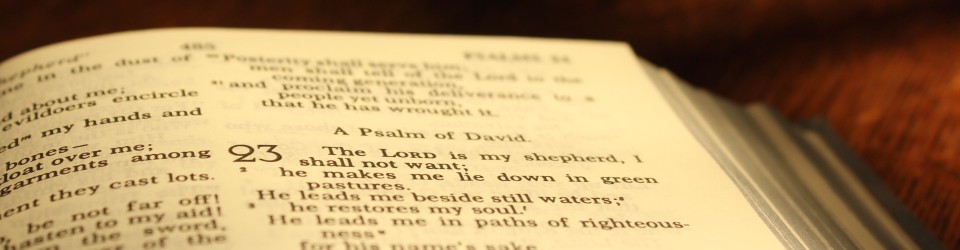
Psalm 19
1 Cor. 1:18-25
John 2: 13-22
“It’s hard to realize this today,” writes Timothy Keller, “but when Christianity first arose in the world it was not called a religion. It was the non-religion. Imagine the neighbors of early Christians asking them about their faith. ‘Where’s your temple?’ they’d ask. The Christians would reply that they didn’t have a temple. ‘But how could that be? Where do your priests labor?’ The Christians would reply that they didn’t have priests. ‘But… but,’ the neighbors would have sputtered, ‘where are the sacrifices made to please your gods?’ The Christians would have responded that they did not make sacrifices anymore. Jesus himself was the temple to end all temples, the priest to end all priests, and the sacrifice to end all sacrifices.”[1]
Christians saw themselves as followers of “the way.” Those on the outside, of course, thought they were fools. What they practiced was either bad religion or no religion at all. “A stumbling block to Jews and foolishness to gentiles.”
But, if you’ve ever wondered why it is that Christ’s atoning death has played such a crucial role in Christian thinking over the years, Rev. Keller makes a pretty simple and clear case. Religion, by definition, demanded sacrifice. Sacrifice was what brought reconciliation between the deity and his subjects. Sacrifice made things right. But, the early Christians found that in Christ things had been made right; they had been made right; whatever they could possibly have offered had been offered for them. Whatever they owed was paid. God didn’t want that what they could afford, it seemed. God wanted to be with them and for them in a different way. And so, God took care of the sacrifice Godself.
It was this different way that captured the hearts and lives of those early Christians. They were, at the start, more or less a rag tag group of society’s less than elite members. They were a people in need of hope, in need of validation from sources beyond the conventional places. They weren’t going to get it from rank, or citizenship, or status, or pedigree, which of course made them good candidates for receiving it as grace, as a gift that they didn’t and couldn’t earn for themselves. The fact that they found it in Christ; the fact that they found it in a man who lived, died, and rose for them made the sheer miraculous, beautiful grace of it all hit home all the more. It told them what their God is truly like. It told them that despite the world’s muck and mire and misguided judgments, it’s dream-killing and depleting ways, they lived in a kingdom that isn’t the world’s, but rather is God’s. They lived with a light that shined in the darkness and the darkness could not overcome it.
Psalm 19 captures the state of things pretty well, I think. It lays out the worlds we straddle. “The heavens are telling the glory of God; and the firmament proclaims his handiwork. Day to day pours forth speech, and night to night declares knowledge.” And then, in the next breath, “There is no speech, nor are there words; their voice is not heard.” …There’s that too. There’s the undeniable reality of that too. There’s brokenness and hardship and pain aplenty. “And yet,” says the psalm, that voice that declares God’s glory and sings God’s praises “goes out through all the earth, and their words to the end of the world.”
It reminds me of that poem by Elizabeth Barrett Browning:
Earth’s crammed with heaven,
And every common bush afire with God;
But only he who sees, takes off his shoes,
The rest sit round it and pluck blackberries,
And daub their natural faces unaware.
What are we aware of? Which world is it that we are living in? A world crammed with heaven? Or one that lacks speech, one where the voice of God, despite its calling, is not heard?
I think too often it is the latter. We’re just too busy. We’re too distracted. Our lives are so loud, so pre-occupied with so many things, not the least of which is the building of our egos in one way or another. Our world conditions us for that very purpose. “Make something of yourself,” the world says, and so we do and we try real hard and maybe, sometimes we ask God to join us in the effort.
Of course, the gospel is a little different than that. “Take up your cross,” our Jesus says. “If you wish to live you must die to self.” “It is no longer I who live,” says the Apostle Paul, “but it is Christ who lives in me.” This isn’t “Go, and make something of yourself;” this is rather, “Be the person whom God has made you to be. Awaken to the risen life within you. Be the unity of Spirit that the Spirit of God is already sharing with you.”
I’ve been working on this myself. Every day for 20 minutes I sit in silent centering prayer. My only job is to rest in the presence of Christ. Every thought, or insight, or feeling, or memory I gently dismiss. I hold on to nothing in favor of simply sitting in the presence of Christ. No words, no actions, no agenda other than being with the One who is already within. …Do you know how hard that is to do? I’m terrible at it. I have so much to say or do or think! I have no time for that kind of silence. My thoughts just don’t want to stop because resting, “resting with God,” seems irresponsible or unproductive. And yet, I do have moments. I have moments when that sort of chatter quiets down, and I feel the miracle of my life and the sense that all of it, all the other stuff, is subordinate to the grace that’s showered upon me.
Do you know what “prodigal” means? It means “recklessly extravagant.” Most of us, when we hear that word, think of the prodigal son, the story from Luke wherein the younger of two brothers horribly offends his father and social convention by requesting his inheritance prematurely and running off to spend it on a wild and lavish lifestyle. When his “prodigality” leaves him destitute he returns full of remorse and regret in hopes that his father will take him in.
Timothy Keller, in his book The Prodigal God suggests that there’s another type of reckless extravagance in the story. The father is prodigal as well. He is prodigal with his love. Not only does he run out to greet his sorry son when he sees him way off in the distance, he also comes out to draw in his older, obedient son, the one who out of resentment refuses to join the party and welcome home his lost brother. The father pours out love regardless of what his children deserve. One son has sought to establish an identity for himself by breaking the rules and living without regard to customs and expectations. He’s above what people say. The other has sought validation through his obedience to the rules. He’s blameless, and therefore righteous, and therefore owed respect by his father, and brother, and everybody else.
Keller suggests that these two brothers represent the bind that we commonly find ourselves in. In one way or another we are actively at work, building ourselves up, strengthening our ego, affirming our worth and asserting our identity. What it amounts to ultimately is the sin of being our own savior.
But, the prodigal father has a different agenda. What he wants to do is party. What he wants to do is pour out his love. It has nothing to do with what either of his sons have earned. They’ve both messed up in their own ways. The key to their joy is grace. All they must do is enter, but that’s a different way of being entirely. Nobody in this equation is asked to “make something of themselves.” That seems to be something that the Father is willing to do with them.
In John’s passage today Jesus enters the temple, sees that it’s all wrong, and he rips it apart. He scatters coins, overturns tables, and chases the sacrifices right out the door. “Do you want a sign?” he asked. “I will build a new one of these in just three days.” And only later did they know what he meant.
Lent is a good time to have our temples torn apart. Now is a good time to find Christ at work rebuilding them himself. For the truth of the matter is that in complete reckless extravagance the God of all time, the God of the heavens, and the firmament, and the day and the night, has come to be with us, to be one of us, to live among and within us now, everyday, and forever. And that’s what matters most about us. Thanks be to God.
[1] Timothy Keller, The Prodigal God, page 16.
0 Comments